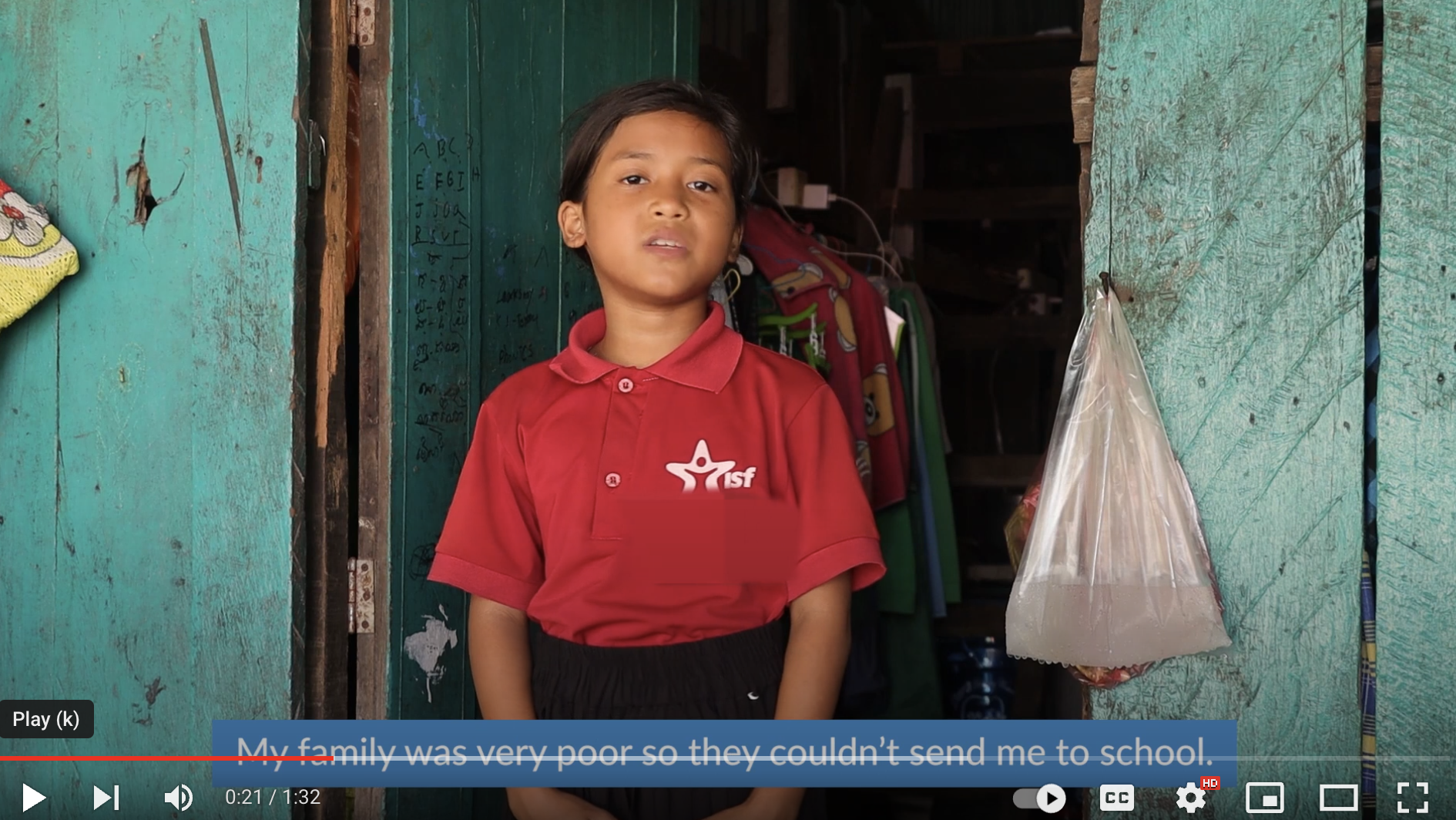
It’s never too late to learn how to read

It’s never too late to learn how to read
At the age of 63, Yoat Lim is discovering a whole new lease of life thanks to her local community library which has not only given her books to read but given her the tools she needed to learn how to read.
Lim lives in an urban poor settlement in Phnom Penh’s Stung Meanchey district, a socio-economically deprived area where approximately 40% of its inhabitants live on less than $1 a day. Hailing from Preah Veng province in southeast Cambodia, Lim relocated to Phnom Penh ten years ago to be closer to her nephew and to help raise her grandniece.
As a child, Lim received approximately one year of education but unfortunately it was not enough to impart vital life skills such as the ability to read and write. At the age of 12, her parents passed away and Lim could no longer attend school. Throughout her life, Lim found that her illiteracy held her back – in the job market and also in her everyday interactions with people. “When you don’t know how to read and write, when you have no knowledge, everything is a struggle” Lim explains. “Most situations require you to be able to read or at least recognise words, when you don’t know anything the simplest situations become scary and nerve-racking” she adds.
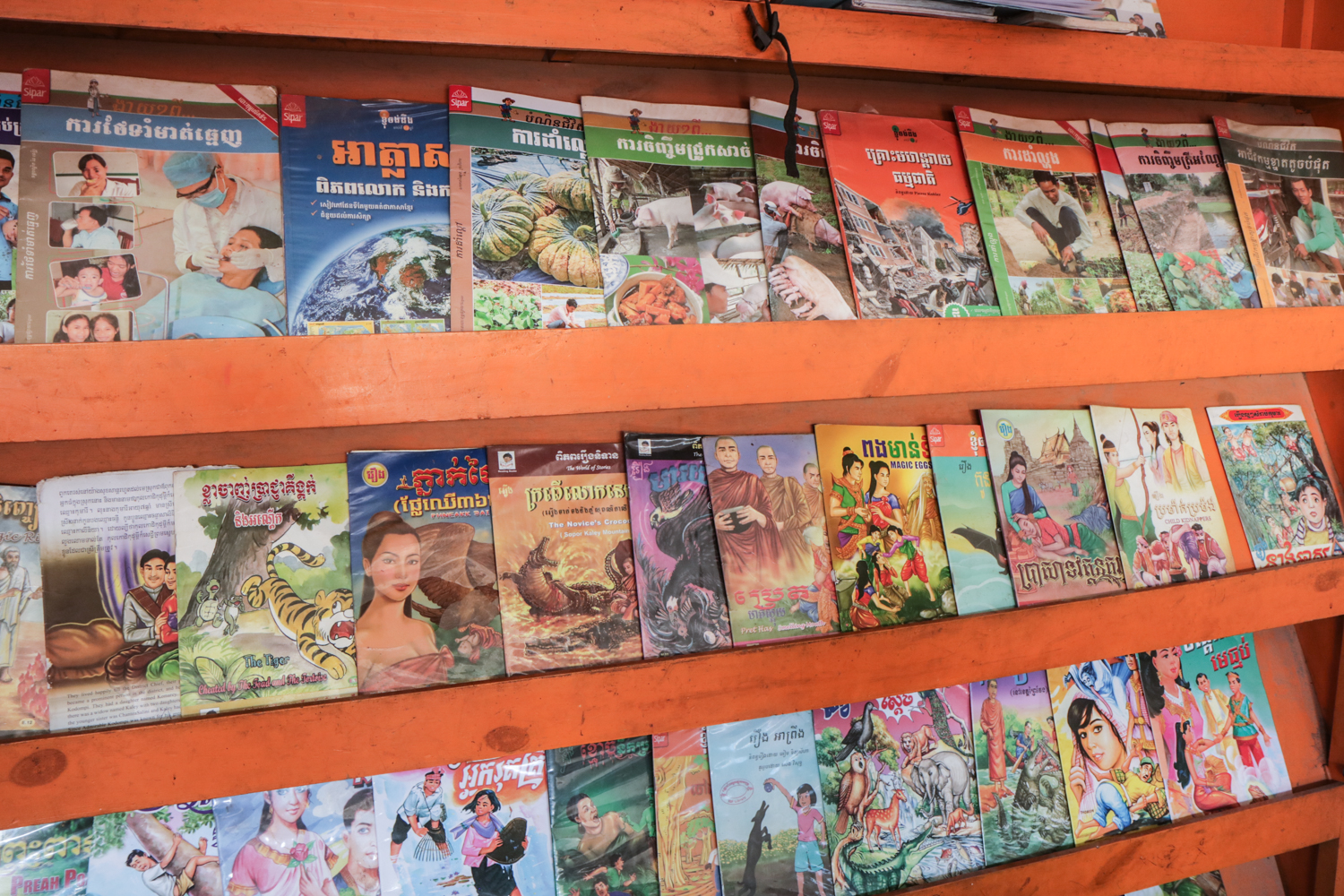

Lim used to visit ISF’s community library to look at picture books and watch the children practicing their lessons. Last year, when ISF’s librarian suggested she join the adult literacy course, Lim jumped at the chance. “I was inspired by the children in the library, I thought if learning is good for them then it will be good for me too” she says. Lim attended classes once a week in 2018 and was very happy and motivated to learn: “when I was in class, I was focused on the lesson, there was nothing else on my mind”.
Lim describes her life before she started the course as “dark” but now that she has successfully completed it and can hold a book in her hands and understand it, there is light. But, this is just the beginning for Lim. Currently, she is visiting the library two or three times per day to practice and still feels a little shy or hesitant to practice with the children there. Her dream for the future is for ISF to develop more literacy classes that she can participate in and for the library to expand its collection of books. While she still has a lot of books left to read, she anticipates and hopes that she’ll need more.