ISF Battles High Dropout Rates


ISF Battles High Dropout Rates
The country of Cambodia has made progress in educating its youth. However, sustaining enrollment after primary school is a continued challenge. With high dropout rates, UNICEF estimates that nearly 55% of students will have dropped out of school by the time they reach 17 years of age1.
Sokha Thim, ISF’s Operations Manager, shares that ISF’s dropout rate is over 50% lower than the national average – in 2020, only 16 students out of 708 dropped out.
Not only has ISF been successful in lowering the dropout rate, but through unparalleled support and quality resources, more than half of ISF graduates earn more than the monthly minimum wage – proving that education is an effective pathway towards building a better future.
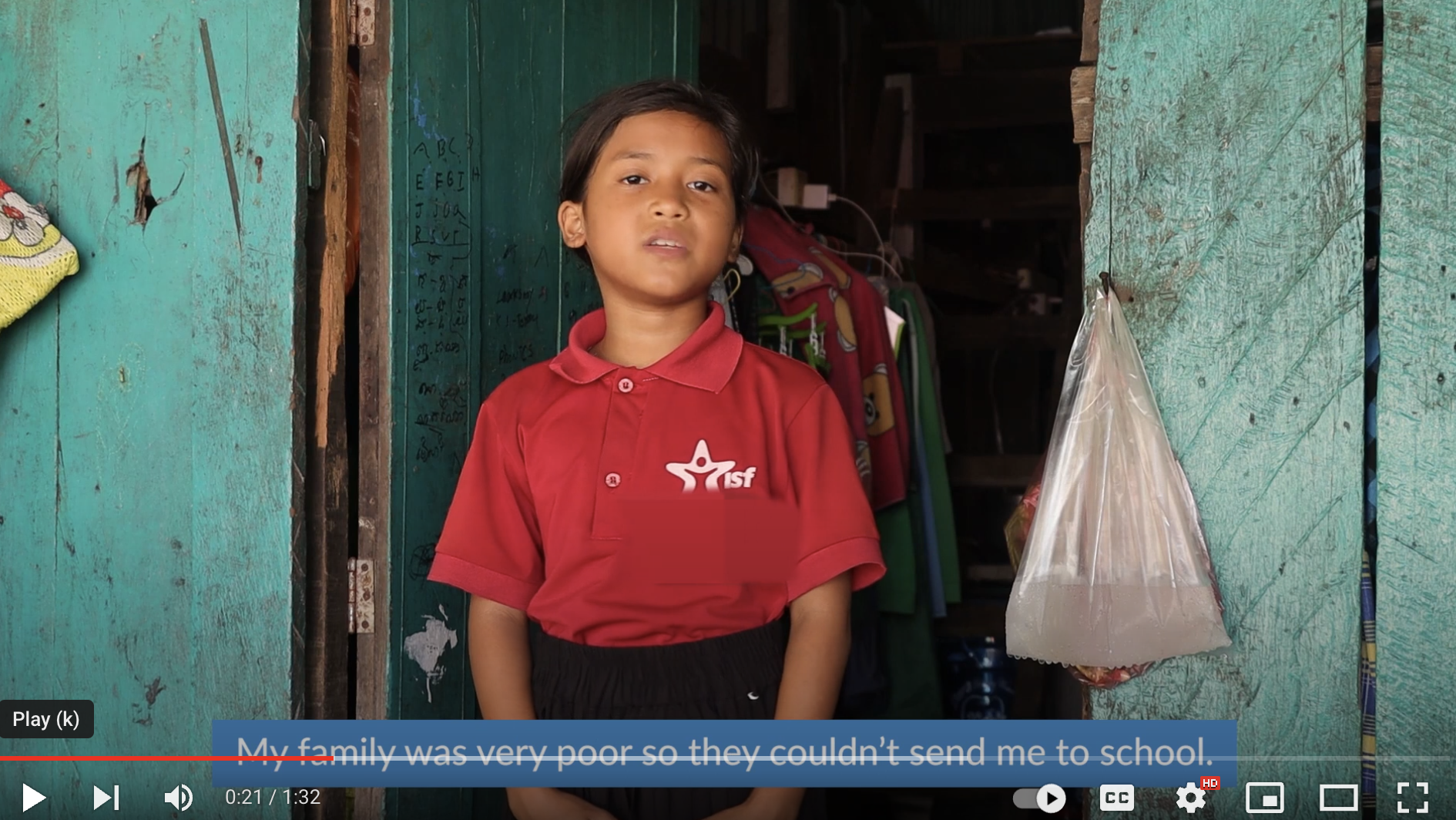
In Cambodia, many marginalised families depend on their children to help supplement their income. To afford the necessities like food, water, and shelter, these children are taught to prioritise work over class, and often fall behind in their studies. With a high cost of living in the city, some families are forced to move back to the provinces, which not only have fewer educational resources but involve relocation which means their child’s education is either interrupted or discontinued.
Sokha shares that because of the mis-prioritisation of education, many students lack ambition for their future. Cambodia’s two biggest industries are textiles and tourism. Garment workers can earn a monthly minimum wage of USD 1922. Although it requires no education or training, employees are expected to work 14-16 hours a day in unsafe and inhumane conditions that not only threaten their health but offer little to no upward mobility or growth. ISF’s mission is to create opportunities and provide resources for vulnerable children to lift themselves out of poverty; with over 50% of ISF’s graduates earning over USD 200 a month (and some making upwards of USD 500), ISF is achieving its mission.

Follow us on Facebook
Join us on our journey to provide opportunities for sport to over 3,500 underprivileged Cambodian children, as well as education, healthcare and nutrition to another 700.
Like our Facebook page to share in our successes, hear about events and find out how you can help these vulnerable youth.
To combat dropout rates, ISF offers additional holistic support. Our Community Engagement Team distributes food parcels and rent subsidies to help offset the cost of labour lost when a child attends school. The Operations Managers meet with students and their family one-on-one to motivate and guide both parties towards a better and brighter future. Some dedicated team members even make trips to the provinces to speak with families and find resolution when students have to relocate.
Globally, the COVID-19 pandemic has negatively impacted education. A recent World Vision survey found that 1 in 3 Cambodian children have not continued their studies during school closures3. Public schools across Phnom Penh were unable to pivot to virtual learning, meaning many students did not have a choice. Despite the economic pressures and school disruptions, 708 children remain engaged through ISF’s Education Programme. 91% of students have progressed to the next grade and 80 students have graduated from our Catch-Up Programme.
At ISF Cambodia, our team is committed to working around the clock to continue finding innovative solutions and resources to support education. With your support, we can continue to make a difference, one child at a time.
1 UNICEF. “Education.” https://www.unicef.org/cambodia/education
2 Medina, Ayman Falak. “Cambodia’s 2021 Minimum Wage: Increased for Textile and Garment Sectors.” ASEAN Briefing. January 29, 2021. https://www.aseanbriefing.com/news/cambodias-2021-minimum-wage-increased-for-textile-and-garment-sectors/
3 World Vision. “Survey on the Impact of COVID-19 on Vulnerable Households in Cambodia.” www.wvi.org/publications/annual-report/cambodia/cambodia-annual-report-2020